
Most Bay Area homeowners who have lived through a full house remodeling project will tell you the same thing: knowing what was coming would have made the experience significantly better. Not because the surprises were catastrophic, but because the discomfort of not knowing, what happens next, how long it takes, what it looks like when it's going well versus poorly, is its own source of stress that knowledge can largely eliminate.
A complete home renovation is one of the most complex projects a homeowner will ever manage. Unlike smaller renovations where you can close a door and forget the work is happening, whole home remodeling touches every space in the house simultaneously or in rapid succession. The kitchen is unavailable while it's being rebuilt. Bathrooms come in and out of service as trades cycle through. Dust and noise become background constants. Decision-making demands don't stop, they accelerate.
This guide walks through the full arc of a Bay Area full house remodeling project from the first planning conversation to the day you walk through a completed home. The goal is a realistic, honest picture of what each phase looks like, including the parts that are genuinely challenging, so that homeowners can approach the process with clear expectations and confidence rather than uncertainty and apprehension.
Before Construction Starts: The Planning Phase That Determines Everything
The residential remodeling process doesn't begin when workers arrive on-site. It begins months earlier, in a series of planning conversations, design sessions, and pre-construction investigations that determine how smoothly the actual construction phase goes. Homeowners who invest seriously in this pre-construction phase almost always have better construction experiences than those who rush to break ground before the project is fully defined.
Defining the Full Scope
The first meaningful challenge of whole home remodeling is scope definition, establishing clearly what the project actually includes. This sounds straightforward, but in practice it's where many remodeling projects run into trouble. Homeowners come in with a general vision ("we want to open up the floor plan, update the kitchen and all the bathrooms, and put new flooring throughout"), and the gap between that vision and a buildable, priced scope of work is where the real planning work happens.
Every decision about scope has budget implications, and every budget decision affects scope. Getting those two variables aligned, before committing to a construction contract, requires honest conversation between the homeowner, the designer, and the contractor about what the vision actually costs and what adjustments might be needed to make it feasible.
Experienced contractors approach full house remodeling scope definition as a collaborative process rather than a negotiation. The goal is to build a complete scope document that the homeowner fully understands and that the contractor can price accurately, so that the contract number is a real number, not a placeholder that will expand through change orders once construction begins.
Design: More Than Aesthetics
For a complete home renovation, the design phase covers both architectural design (floor plan changes, structural modifications, window and door locations, ceiling heights) and interior design (material selections, finish specifications, lighting plans, cabinetry design). These two disciplines need to work in parallel rather than sequentially, interior design decisions affect construction requirements, and architectural decisions shape what interior design options are feasible.
Aziz Construction's space planning services integrate both disciplines within a single coordinated process, which means the floor plan being developed for permit is simultaneously being designed for livability and finish quality, not just structural compliance. This integration consistently produces better outcomes than the traditional sequential model where an architect finishes before an interior designer begins.
Pre-Construction Site Investigation
Before finalizing the scope and budget for a whole home remodeling project, particularly in pre-1980 Bay Area homes,experienced contractors conduct a pre-construction site investigation to understand existing conditions that will affect the project. This typically includes assessing the electrical panel and wiring, inspecting visible plumbing, evaluating the HVAC system, checking the structural condition of framing in areas that will be opened up, and looking for signs of water intrusion, asbestos, or lead paint that need to be addressed during construction.
The findings from this investigation directly inform the scope and budget. Hidden conditions discovered during this phase cost nothing to address in planning; the same conditions discovered after drywall is up become expensive surprises. This is one of the most practically valuable things an experienced general contractor brings to a luxury home remodeling project: the knowledge of what to look for before it becomes a problem.
Permits: Building in the Timeline Reality
Bay Area permit timelines are a genuine planning variable that first-time renovators consistently underestimate. For a whole home remodel with structural modifications, full permit packages, architectural drawings, structural engineering, Title 24 energy compliance needs to be submitted and approved before construction can begin. Depending on the city, that review process takes anywhere from 6 to 16 weeks for an initial response, with potential back-and-forth on plan check comments adding additional time.
Homeowners who begin their planning with a target construction start date and work backward often discover that the permit timeline forces an earlier design start than they anticipated. Building this reality into the project timeline from the beginning rather than treating permits as an administrative detail that can be figured out later is fundamental to realistic remodeling timeline planning.
The Remodeling Timeline: What Each Phase Looks Like in Practice
Once permits are in hand and construction begins, the remodeling timeline moves through a defined sequence of phases that experienced contractors execute in a choreographed order. Understanding that sequence helps homeowners know what to expect at each stage and recognize when things are progressing normally versus when something has gone off-track.
Week 1 to 2: Mobilization and Demolition
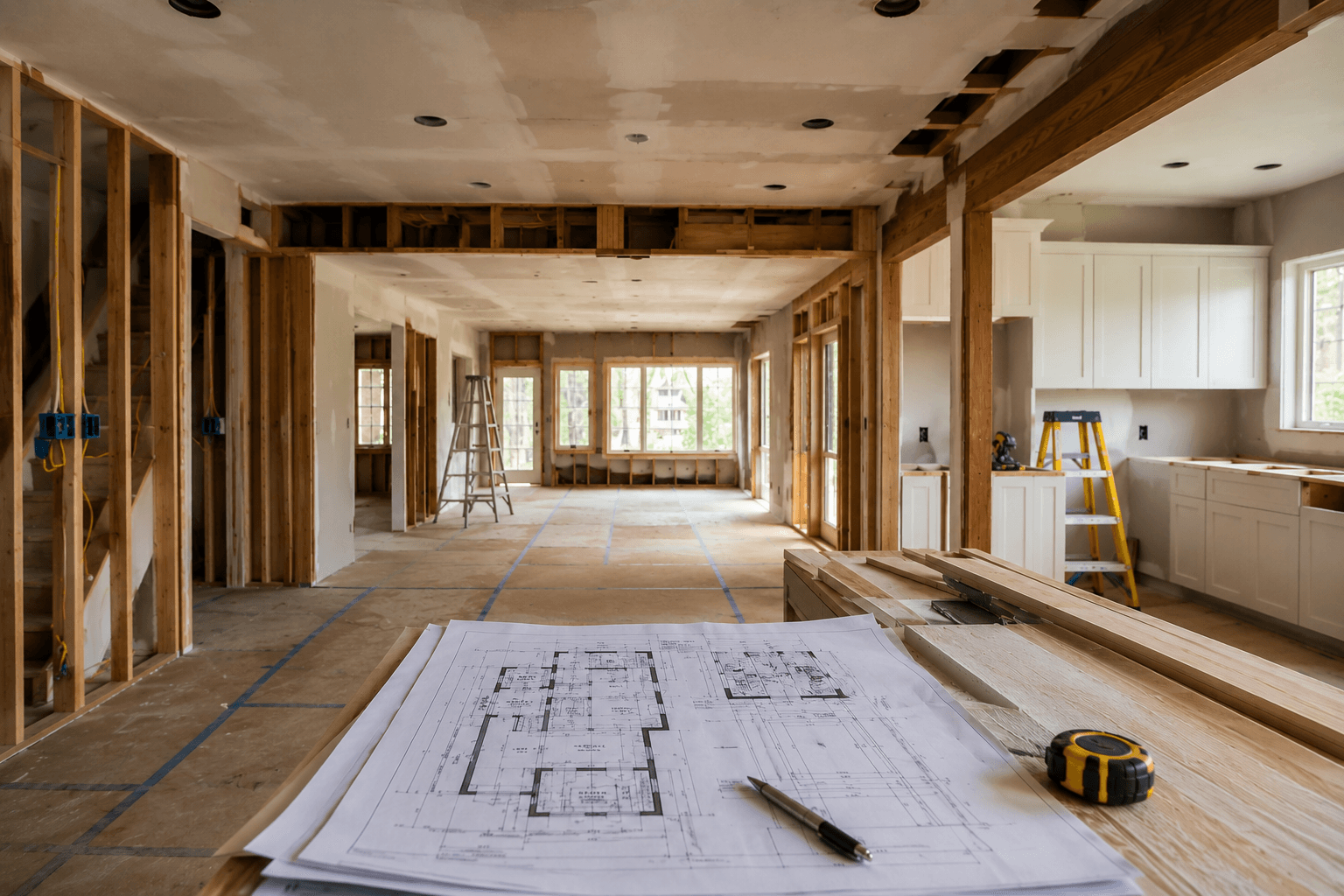
The opening phase of a full house remodeling project is often the most viscerally jarring for homeowners. Mobilization involves setting up site protection, floor protection on surfaces being preserved, dust barriers between work zones and any occupied areas, debris chutes or roll-off containers for waste and then demolition begins. Kitchens get stripped to the studs. Bathroom tile comes out. The floor is pulled up. In homes with significant structural changes, walls come down.
For most homeowners, demolition triggers a mix of excitement and anxiety that's difficult to fully anticipate. The house you've lived in for years is being dramatically altered, and there's a period typically one to two weeks where it looks dramatically worse than it did before construction started. This is normal, expected, and temporary. Experienced contractors brief their clients on this before it happens precisely because the reaction is so consistent and so unsettling for homeowners who weren't prepared for it.
Weeks 2 to 6: Structural and Rough Work
After demolition, the structural phase begins any load-bearing wall modifications, beam installations, foundation work, or other structural scope. This is followed by MEP rough-in: electricians run new circuits and panels, plumbers reconfigure supply and drain lines, HVAC technicians run ductwork and mechanical equipment. On a complete home renovation, this phase involves multiple trades cycling through the house in a carefully coordinated sequence.
This phase requires multiple inspections by the local building department, framing inspection, rough electrical, rough plumbing, rough mechanical before work can be covered up. Each inspection needs to be scheduled, passed, and signed off before the next phase can proceed. An experienced contractor anticipates these inspection milestones in the project schedule and coordinates subcontractors accordingly, avoiding the idle time that comes from waiting on inspections that weren't anticipated or scheduled.
Weeks 5 to 9: Insulation, Drywall, and Close-In
With rough inspections passed, insulation goes in and drywall follows, the phase that transforms the house from an open skeleton back into enclosed rooms. For many homeowners, this is the second major emotional milestone of the remodeling timeline: the first time the project starts looking like a home again rather than a construction site.
Drywall finishing, taping, mudding, and sanding, is one of the phases that most directly reveals the quality level of a construction team. In a luxury home remodeling project, drywall finishing needs to achieve a Level 5 finish standard: a skim coat over the entire surface that eliminates texture variation and produces a perfectly flat wall suitable for gloss or semi-gloss paint finishes. This level of finish takes time and skill that a competent contractor builds into the schedule and scope, and that a homeowner can verify by asking specifically about it during the preconstruction phase.
Weeks 8 to 14: Finish Work Begins
The finish phase is where the project's quality becomes fully visible, and where the pace of homeowner decision-making is highest. Cabinetry installation, countertop templating and installation, tile setting, hardwood or engineered flooring installation, interior paint, trim carpentry, fixture installation, and finish hardware all happen during this phase, often with multiple trades working in different spaces simultaneously.
For a kitchen remodeling contractor, the finish phase is where the design decisions made months earlier translate into physical reality for the first time. This is typically where homeowners experience the gap, if one exists, between what a material looked like as a sample and how it reads at full scale in the actual space. Experienced designers anticipate this and specify materials they've seen at scale in comparable projects, but some recalibration of expectations during this phase is normal and healthy.
Weeks 12 to 16: Systems Integration and Punch List
As individual spaces near completion, the project transitions from active construction to systems integration and punch list work. HVAC systems get commissioned and balanced. Plumbing fixtures are connected and tested. Electrical systems are fully energized, circuits are labeled, and any issues identified during the final inspection are resolved. Smart home systems, if included, are programmed and tested.
The punch list, a formal document of incomplete or below-standard items identified during a pre-completion walkthrough, is one of the most important tools in a well-run luxury home remodeling project. A thorough punch list process, conducted jointly by the homeowner and the contractor before final payment is released, ensures that every outstanding item is documented and addressed before the project formally closes. Contractors who resist a thorough punch list process are a warning sign; those who produce one proactively demonstrate the professional confidence that comes from delivering quality work.
Final Inspections and Certificate of Occupancy
The formal conclusion of the permitted construction process is the final inspection by the local building department and the issuance of a Certificate of Occupancy or final sign-off. Final inspections cover life-safety systems, smoke and CO detectors, egress windows, electrical panel labeling, as well as the general completeness of the permitted scope. In Bay Area cities, final inspections are scheduled through the building department and may require multiple visits across different inspection categories.
Living Through a Full House Remodeling Project
The logistical reality of living through a whole home remodeling project deserves honest attention, because the decisions homeowners make about temporary housing, access management, and communication protocols significantly affect both their experience and the project's momentum.
To Stay or Not to Stay
For a true complete home renovation, one that involves the kitchen, multiple bathrooms, and major system work throughout the house, most homeowners find that relocating during the core construction phase is worth the cost and inconvenience. A kitchen that's been stripped to the studs, a single operational bathroom serving multiple adults, and the constant noise, dust, and disruption of active construction in every room makes the home genuinely difficult to inhabit productively.
That said, relocation for a 3 to 4 month construction period in the Bay Area rental market is itself a significant expense. Homeowners should factor temporary housing costs, typically $4,000 to $8,000 per month for a reasonably comparable rental in Bay Area communities into the total project budget, not treat it as an unforeseen expense. Some homeowners negotiate short-term furnished rentals; others stay with family; others phase the work strategically to maintain a habitable core in the home during construction.
Phasing for Habitability
For homeowners who want or need to stay in the home during construction, strategic phasing can maintain a livable minimum throughout the project. This typically means completing one bathroom before beginning work on the others, preserving kitchen function until the new kitchen is close to operational, and sequencing bedroom work to maintain sleeping areas in functional condition during the most disruptive construction phases.
Phasing for habitability adds some complexity to the construction schedule, it constrains the sequence in ways that pure construction efficiency wouldn't, but experienced contractors can accommodate it with thoughtful planning. The key is establishing the habitability requirements before construction begins, not after the contractor has developed a schedule that doesn't account for them.
Communication During Construction
A full house remodeling project produces a continuous stream of decisions, updates, and questions that the homeowner needs to engage with throughout the construction phase. Material deliveries that don't match specifications. Paint colors that look different on the wall than on the sample. Field conditions that require design adjustments. Questions from subcontractors about installation details.
Establishing a clear communication protocol before construction begins, regular site meetings, a defined channel for urgent questions, a process for reviewing and approving change orders, creates structure that prevents both information overload and communication blackouts. The best general contractors proactively manage homeowner communication as part of their project management responsibility, not as an interruption of it. If you're evaluating contractors, asking specifically how they communicate with clients during construction is a revealing question.
The Decision-Making Marathon: What You'll Be Asked Throughout the Project
One of the most underestimated aspects of whole home remodeling is the volume of decisions that construction generates, and the time pressure under which many of them need to be made. Unlike smaller projects where the decision set is contained, a complete home renovation requires active homeowner input across every space, every system, and every finish category, often simultaneously.
Decisions That Must Be Made Before Construction Starts
The most important category of decisions and the ones that generate the most expensive problems when deferred, are those that affect construction: structural choices, MEP system configurations, window and door locations, floor plan layouts. These decisions need to be finalized before permits are submitted, because changes after permit approval require revised drawings, plan check resubmission, and timeline delays that compound through the rest of the project schedule.
Finish Selections: Earlier Than You Think
Material and finish selections have longer lead times than most homeowners anticipate. Custom cabinetry takes 10 to 16 weeks from order to delivery. Many imported tile lines have 6 to 10 week lead times. Premium appliance packages, particularly high-end ranges and refrigerators, sometimes require 12 to 20 weeks of lead time, and availability can be unpredictable.
This means finish selections for a luxury home remodeling project need to begin months before construction starts, ideally during the design phase, when decisions can be made thoughtfully rather than under the time pressure of a construction schedule waiting on a missing product. Homeowners who arrive at the finish phase without selections made consistently create delays that affect the project schedule and their own out-of-pocket costs.
Working with dedicated bathroom remodeling services teams that coordinate directly with the interior design process helps ensure that tile, fixtures, and vanity specifications are resolved before the trades need them, eliminating one of the most common sources of construction-phase delays in residential remodeling.
The Change Order Discipline
Change orders, modifications to the agreed scope after the contract is signed, are a normal part of residential remodeling. Field conditions reveal things that weren't visible during pre-construction. Homeowners see work in progress and recognize that an adjustment would produce a better result. Materials specified aren't available and need to be substituted.
The discipline around change orders is what separates well-managed projects from chaotic ones. Every change order should be in writing, with a clear description of what is being changed and the precise cost and schedule impact. Verbal agreements about changes, "we'll sort it out at the end" arrangements, and ambiguous scope modifications are the primary source of contractor-homeowner disputes on remodeling projects. A contractor who resists written change orders is telling you something important about how they manage projects.
What Makes a Bay Area Full House Remodeling Project Go Well
After working through many complete home renovations in the Bay Area, the pattern of what separates projects that go well from those that become difficult is consistent. It's almost never about the individual tradespeople or the materials selected. It's about the planning quality, the communication structure, and the experience of the team leading the project.
A Fully Defined Scope Before the Contract Is Signed
The single most reliable predictor of a smooth remodeling experience is a complete, detailed scope of work established before the construction contract is executed. When both the homeowner and the contractor are working from the same clear understanding of what's included, documented in a line-item scope, not a general description, the project has a defined baseline against which progress and changes can be measured. Projects that start with vague scopes produce vague results and contentious change order conversations.
An Experienced General Contractor with Local Knowledge
The quality of the general contractor leading the project determines more of the outcome than any other single factor. An experienced home remodeling contractor who has completed numerous full home remodeling projects in Bay Area cities knows how the local permit process works, has established relationships with quality subcontractors, understands the conditions that older Bay Area homes typically present, and has the project management infrastructure to coordinate a complex, multi-trade project over a 4 to 6 month timeline.
This experience gap between contractors shows clearly on whole-home projects. The complexity of managing 8 to 12 trades across an entire house, coordinating permit inspections, managing a material procurement schedule, and maintaining consistent quality across every space simultaneously is genuinely demanding work. Contractors who do it well make it look easier than it is; those who don't, show the strain.
Realistic Expectations About the Process
Homeowners who approach a complete home renovation expecting it to be smooth and predictable at every stage set themselves up for unnecessary stress. Construction involves genuine uncertainty, conditions that can't be known until walls are opened, materials that arrive damaged, inspection schedules that shift. None of these things represent project failure; they're the normal texture of construction on complex residential projects.
The homeowners who have the best experiences are those who expect reasonable uncertainty and have a contractor they trust to navigate it transparently and competently. That trust is built before construction starts, through the quality of pre-construction communication, the clarity of the contract, and the contractor's demonstrated track record on similar projects. If you don't feel confident in your contractor before the first wall comes down, the construction phase will not improve that relationship.
Adding an ADU to a Full Home Remodeling Project
A growing number of Bay Area homeowners undertaking whole home remodeling projects are simultaneously adding an accessory dwelling unit recognizing that the mobilization, permitting, and site disruption of a major renovation create a natural window to tackle the ADU project at the same time. Building both under a single contractor engagement is almost always more efficient than completing them sequentially.
Concurrent ADU construction alongside a full home remodel shares utility connection work, reduces duplicate mobilization costs, and allows the design team to treat the primary home and ADU as a cohesive property rather than two separate projects that happened to end up on the same lot. If an ADU is in your planning horizon, discussing it at the start of the remodeling planning process, not after the primary project is complete, is consistently the more cost-efficient path.
Going In With Clear Eyes: The Best Preparation for a Full Home Remodel
The homeowners who have the most positive full house remodeling experiences share a consistent profile: they invested seriously in pre-construction planning, chose a contractor with demonstrated experience in the specific project type and local market, established clear communication protocols before construction began, and maintained realistic expectations about what a months-long whole home remodeling project actually involves.
None of those things eliminate the inherent complexity of a complete home renovation. But they transform that complexity from a source of anxiety into a manageable process with a clear path from the current state of your home to the one you've been planning. The finished result, a home rebuilt to your standards, with modern systems, updated design, and spaces that work for how you actually live, is worth the investment in both money and patience that getting there requires.
Aziz Construction guides Bay Area homeowners through full house remodeling projects across Palo Alto, Menlo Park, San Jose, Foster City, San Mateo, and surrounding communities. If you're beginning to plan a complete home renovation and want to understand what the process looks like from start to finish for your specific home, reach out to start the conversation.
Frequently Asked Questions
How long does a full house remodeling project take in the Bay Area?
A complete home renovation in the Bay Area typically takes 4 to 8 months of active construction, depending on scope and the specific city's permit process. Pre-construction planning, design, permitting, pre-construction investigation, commonly adds another 3 to 6 months before construction begins. Total project timelines from the first planning conversation to move-in frequently run 9 to 14 months for comprehensive whole home remodeling projects.
Do I need to move out during a full house remodel?
For a true complete home renovation involving the kitchen, multiple bathrooms, and significant system work, most homeowners find that relocating during the active construction phase produces a better experience and often a faster project. That said, it's not always required — strategic phasing can maintain a livable minimum for homeowners who need to stay in place. The decision should be made during pre-construction planning, with a clear habitability strategy built into the project schedule.
What is the hardest part of a whole home remodeling project?
The most consistently challenging aspect for homeowners is the sustained decision-making demand over a multi-month period, combined with the disruption of living without a functional home. The volume of decisions, material selections, change order approvals, design adjustments, doesn't let up during construction, and the cumulative fatigue of making consequential decisions under time pressure while living in temporary housing or a disrupted home is genuinely demanding. Good pre-construction preparation, particularly completing all finish selections before construction starts, significantly reduces this burden.
How do I know if my contractor is doing quality work during construction?
Several things signal quality during construction: the site is organized and clean at the end of each work day, work is covered up only after inspections are passed, the contractor communicates proactively without prompting, change orders are presented in writing with clear pricing before work proceeds, and the contractor welcomes rather than discourages homeowner site visits. Red flags include the opposite of each of these: messy sites, work covered before inspection, communication gaps, vague verbal change order agreements, and resistance to homeowner involvement.
What should be included in a full house remodeling contract?
A complete remodeling contract should include a detailed, line-item scope of work describing every element of the project; a payment schedule tied to construction milestones rather than calendar dates; a clear change order process requiring written authorization before additional work proceeds; a project timeline with major milestone dates; the contractor's license number and insurance certificates; a warranty for both materials and workmanship; and a dispute resolution process. Contracts that lack any of these elements leave meaningful gaps that create problems if the project encounters complications.
How much should I budget for contingency on a full house remodel?
For a Bay Area full house remodeling project in a home built after 1980 with no known structural issues, a 10 to 15 percent contingency reserve is a reasonable starting point. For pre-1980 homes, particularly those with original electrical, plumbing, or structural systems that haven't been updated, 15 to 20 percent is more appropriate. The contingency fund is not a slush fund for scope additions; it's specifically for genuinely unexpected conditions discovered during construction. Scope additions should be evaluated separately against the overall project budget.
How do I choose between remodeling and rebuilding from scratch?
The remodel-versus-rebuild decision depends on the condition of the existing structure, the home's fundamental floor plan and layout, and the homeowner's program requirements. Homes with sound structure and functional layouts that can be cost-effectively updated through remodeling almost always represent better value in a remodel approach. Homes with significant structural deficiencies, deeply problematic layouts, or program requirements that simply can't be met within the existing footprint may be stronger candidates for ground-up construction. An experienced contractor with both remodeling and new construction expertise can provide an honest comparative analysis for specific properties.

