
A high-end home remodeling project is not simply a construction job. The structural work, the new systems, the updated floor plan, these form the foundation of what gets built. But the interior design layer is what determines whether the finished home feels intentional, refined, and personal, or whether it feels like a well-built shell searching for a point of view.
In the Bay Area's luxury residential market, this distinction matters enormously. Homeowners investing $500,000 to $2 million or more in a remodeling project increasingly understand that construction quality and design quality are not the same thing, and that the final result depends on both. Home interior design services that integrate meaningfully with the construction process rather than being layered on afterward as a cosmetic afterthought consistently produce better outcomes: fewer finish selections that don't translate from sample to installed reality, fewer construction details that don't account for how they'll look finished, and fewer expensive changes made under time pressure late in the build.
This guide explores what professional home interior design services actually include in the context of a high-end remodeling project, how they integrate with the construction process, and what Bay Area homeowners should look for when evaluating interior design as part of a larger renovation.
What Home Interior Design Services Actually Cover
The term "interior design" is applied broadly, from online mood board services to full-service luxury interior design practices with in-house procurement teams and project managers. Understanding what a meaningful scope of residential interiors work actually includes helps homeowners evaluate what level of service their project genuinely needs.
Space Planning and Layout Optimization
Before a single finish is selected, professional interior designers work on space planning, the discipline of understanding how a home's rooms and circulation paths can be arranged to support how the occupants actually live. On a remodeling project, this often means evaluating whether the architectural layout being considered is truly optimized for the client's daily life, not just aesthetically pleasing on a floor plan.
In practice, this might mean questioning whether a proposed kitchen island placement allows three people to cook simultaneously without blocking the refrigerator path. Or whether a primary bedroom's furniture arrangement will allow the door to open fully. Or whether a home office positioned in a specific room will have adequate acoustic separation from the main living areas. These are the kinds of functional details that determine whether a beautifully designed home is also a well-designed one.
For homeowners pursuing interior design and space planning as part of a broader renovation, integrating this work early, during the architectural design phase, is where it delivers the most value. Spatial adjustments made on paper cost nothing. Made in the field during framing, they're significantly more expensive.
Concept Development and Design Direction
Once the spatial framework is established, interior design work moves to concept development, defining the design direction that will guide every material, finish, and furniture selection across the project. In luxury interior design, this isn't about selecting a style from a catalog. It's about developing a considered point of view that reflects the homeowner's aesthetic sensibility, the home's architecture, the Northern California light quality, and the way the family actually inhabits the space.
Modern california homes sit within a specific design tradition, an architecture and interior culture shaped by indoor-outdoor living, natural material palettes, clean lines, and a general preference for spaces that feel both elevated and livable rather than formal and untouchable. A skilled interior designer working in this context understands those references and knows how to honor them without producing spaces that feel derivative or trend-dependent.
Material and Finish Selection
This is where interior design work becomes most visible and where its value is most clearly felt. For a full home remodeling project in the Bay Area, the range of material decisions is vast: flooring species, finish, and width; countertop materials for kitchen and bathrooms; tile selections for backsplashes, showers, and floors; cabinet door style, wood species, and finish; hardware finishes throughout; paint colors and sheens in every space; window treatments; and lighting fixtures for every room.
Each of these decisions sounds manageable in isolation. Together, they represent hundreds of interrelated choices that need to work cohesively across the entire home. An experienced interior designer manages this selection process systematically, developing a material palette that creates visual harmony, coordinating specifications with the contractor so what gets ordered matches what gets installed, and maintaining the design vision through the inevitable substitutions and adjustments that arise during any real construction project.
Furniture, Fixtures, and Procurement
Full-service luxury interior design typically extends beyond the built environment to include furniture selection, custom upholstery, window treatments, area rugs, lighting, art, and accessories, the elements that complete a space and make it function as a home rather than a showroom. Procurement, actually sourcing, ordering, and managing the delivery and installation of these items, is a significant operational undertaking on a full home project that many homeowners underestimate.
Designers with established trade relationships have access to furniture and material lines not available through retail channels, often at prices that partially or fully offset the design fee. They also manage the logistics of coordinating deliveries to arrive when construction is complete rather than sitting in storage for months, handling quality control on received items, and managing replacements for pieces damaged in transit, a far more common occurrence than most homeowners expect.
Construction Administration and Design Oversight
On a well-run luxury remodeling project, the interior designer doesn't hand off a selection schedule and disappear. They remain engaged through the construction phase, reviewing shop drawings for custom cabinetry, confirming tile layout and pattern orientation before installation begins, visiting the site at key milestones to verify that construction details are being executed in alignment with the design intent, and making real-time decisions when field conditions require adjustments to the plan.
This ongoing involvement is one of the clearest differentiators between professional interior design services and finish selection assistance. A designer who stays engaged through construction catches problems before they're permanent and those interventions routinely save far more than the cost of the continued engagement.
Why Interior Design and Construction Need to Work Together
The traditional sequence, architect designs the building, homeowner separately hires an interior designer, general contractor builds what the architect drew, creates predictable problems on high-end projects. When design disciplines work in sequence rather than in parallel, the hand-offs between them become sources of misalignment that compound through the project.
The Cost of Late Design Decisions
Finish selections made after framing is complete, or worse, after drywall is up, are decisions made under time pressure that the construction schedule creates. A homeowner who hasn't finalized their tile selection by the time the tile contractor is mobilized faces an uncomfortable choice: make a rushed decision or pay to delay the subcontractor while the decision is worked out. Neither outcome is good, and both are avoidable.
Professional home interior design services that begin during the pre-construction phase, developing the full selection schedule in parallel with architectural design, eliminate this pressure. By the time construction begins, every material is specified, samples have been reviewed in the actual space under the actual lighting conditions, long-lead items are on order, and the contractor has a complete finish specification to build from.
Construction Details That Affect Design
Many interior design decisions have construction implications that aren't visible in a finish sample. The decision to use large-format floor tiles requires a flatter subfloor tolerance than smaller tiles, a substrate preparation detail the contractor needs to know before pouring the slab or laying the subfloor. The decision to use a specific range hood with an unusual duct diameter needs to be coordinated with the HVAC rough-in. A custom built-in bookcase that runs to the ceiling needs backing in the wall framing.
When interior designers and contractors work from separate documents and communicate through the homeowner rather than directly with each other, these details get missed. When they work from an integrated specification, developed together before construction begins, they get built correctly the first time.
Lighting Design as a Construction Discipline
Lighting design is one of the most underappreciated dimensions of residential interior work, and one of the clearest examples of why design and construction need to be coordinated early. The location of every recessed fixture, pendant, sconce, and under-cabinet light needs to be reflected in the electrical rough-in plan before the ceiling goes up and the walls close. Changes to lighting layout after drywall is installed are expensive and disruptive, and yet they're a common result of homeowners who didn't finalize their lighting design before the electrical rough-in phase.
A well-integrated interior design process produces a lighting plan that is fully coordinated with the architectural reflected ceiling plan before construction begins, so the electrician has a complete and buildable specification to work from on day one.
Interior Design for the Most Important Spaces in a Bay Area Remodel
While interior design services ideally cover the full home, certain spaces consistently benefit most from professional design attention in the context of a high-end Bay Area remodeling project.
Kitchen Design: Where Function and Luxury Meet
The kitchen is both the most technically complex space in a residential remodel and the one where homeowners consistently invest the most, for good reason. Layout planning, appliance selection, cabinetry design, countertop material, backsplash tile, and hardware finishes all intersect in a space that needs to function flawlessly for daily family cooking while also presenting well as the visual heart of the home.
Luxury interior design at the kitchen level goes beyond selecting premium appliances and stone surfaces. It means thinking carefully about how the cabinetry integrates with the architecture, how the island dimensions relate to traffic flow and seating, how the lighting layers from task to ambient to accent, and how every material decision contributes to a cohesive whole rather than a collection of individually impressive elements. For homeowners planning a kitchen remodeling project at a premium finish level, integrated interior design from the concept stage is what separates a kitchen that looks designed from one that genuinely is.
Primary Bathroom: The Luxury Benchmark
Primary bathrooms in high-end Bay Area homes have evolved significantly over the past decade. The expectation in today's luxury residential market, particularly in Palo Alto, Menlo Park, and Los Altos, is a primary bath that delivers a spa-caliber experience: generous square footage, a soaking tub positioned as a focal point, a walk-in shower with multiple water features, radiant floor heating, high-end plumbing fixtures, and a material palette that reads as genuinely luxurious rather than just expensive.
Achieving that result requires more than selecting premium products. It requires a design approach that thinks about the bathroom as a complete composition, how the tile pattern and format respond to the room's proportions, how the vanity cabinetry relates to the architectural millwork, how natural light is maximized while privacy is maintained, and how every fixture and finish contributes to a singular design experience. Working with an experienced bathroom remodeling contractor who coordinates directly with the interior design team is what makes that composition buildable at the quality level the design intends.
Living and Dining Spaces: Designing for California Life
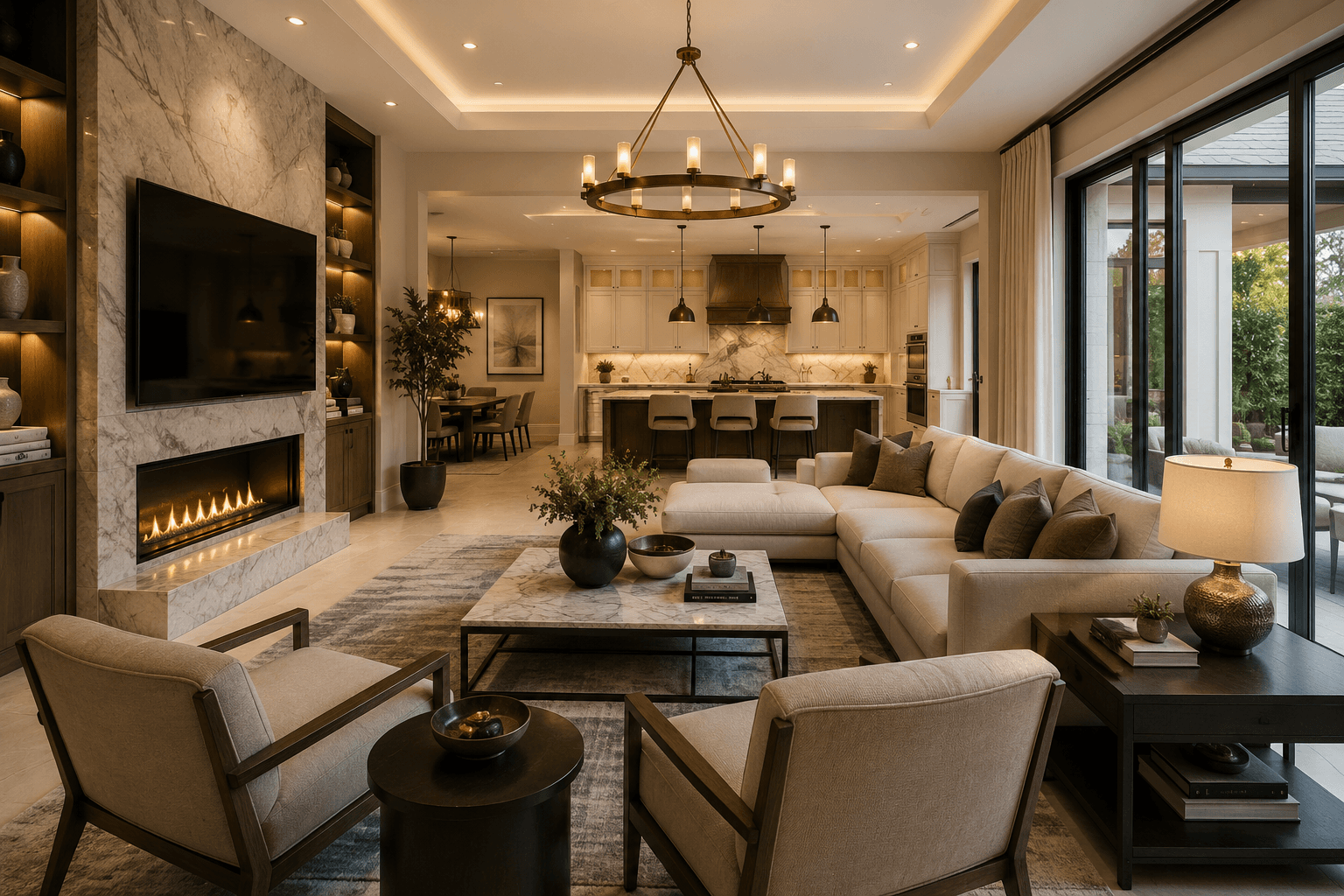
Bay Area homeowners live differently than homeowners in other parts of the country, particularly around indoor-outdoor connection, casual-formal balance, and the quality of natural light that defines the California residential experience. Interior design for living and dining spaces in modern california homes needs to reflect those realities: furniture scaled for actual family use, not just visual impact; material choices that hold up to the way real families inhabit their homes; and a lighting scheme that transitions gracefully from the bright afternoon sun of a Palo Alto afternoon to a dinner party evening without harsh transitions.
The residential interiors that age best in the Bay Area market, the ones that still feel fresh and personal ten years after they're built, tend to share a commitment to quality over trend, natural materials over synthetic ones, and spatial generosity over spatial efficiency. These are design principles, not product selections, and they're what separates interior design that creates lasting value from decorating that dates.
Bedrooms and Private Spaces
Bedrooms in luxury remodeling projects often receive less design attention than kitchens and primary baths, and it shows in the finished homes. A primary bedroom in a high-end renovation deserves the same level of design consideration as any other space: thoughtful furniture placement that honors the room's proportions, a lighting scheme that supports reading, sleeping, and getting dressed without a single fixture doing all three jobs poorly, and a material palette that creates a genuinely restorative atmosphere.
Secondary bedrooms, particularly in homes designed with multigenerational living or regular guest use in mind, benefit similarly from design consideration that goes beyond a fresh coat of paint and new flooring. These spaces set the impression for guests and extended family, and in Bay Area homes at the luxury tier, homeowners increasingly expect them to reflect the same design intention as the primary spaces.
Interior Design in the Context of Full Home Remodeling
On a full house renovation, the interior design scope is at its most expansive and its most impactful. Every space gets addressed, which means the interior designer is managing a cohesive narrative across the entire home, ensuring that the kitchen, living areas, primary suite, secondary bedrooms, and transition spaces all read as part of a unified design intention rather than a series of individually considered rooms that don't quite connect.
This whole-home design coherence is harder to achieve than it sounds. Material palettes that work beautifully in isolation sometimes clash when adjacent spaces are considered together. Flooring that reads well in a living area can feel at odds with an adjacent entry if the transition isn't carefully designed. The rhythm of trim profiles, door hardware, and ceiling heights across a home's rooms either creates a sense of intentional flow or reveals itself as a collection of separate decisions.
Interior designers working at the whole-home scale develop what's sometimes called a design bible, a complete, room-by-room specification document that captures every finish, material, and product selection across the project, coordinated for consistency and buildability. This document becomes the construction team's specification for the finish phase and serves as the homeowner's reference for any future decisions about additions or changes after the primary project is complete.
Interior Design for New Construction vs. Remodeling
Interior design for new home construction and interior design for a remodeling project share the same fundamental discipline but present different constraints and opportunities. New construction offers a genuinely blank canvas, no existing conditions to work around, no inherited architectural decisions to accommodate, no finishes to match or transition from. Every decision is additive rather than responsive.
Remodeling projects, by contrast, always involve existing conditions that shape the design response. A home with strong original architecture, well-proportioned rooms, quality original millwork, distinctive architectural character, offers a design foundation that new construction has to build from scratch. Working with those existing qualities rather than against them is one of the core disciplines of residential remodeling design, and it's where experienced interior designers demonstrate a different kind of value than they do on ground-up projects.
The integration of interior design with construction is, if anything, more important on a remodeling project than on new construction, because the consequences of misalignment between design intent and existing conditions are more likely and more costly. A designer who has worked closely with construction teams on remodeling projects develops an intuition for what existing conditions are likely to present, which design decisions are straightforward to execute in the field, and which ones need to be specified with extra precision to avoid costly field changes.
What to Look for When Choosing Interior Design Services for a Bay Area Remodel
Not every interior design practice is suited to high-end remodeling projects. The discipline required to manage a full-home finish specification across a 12-month construction project is genuinely different from the work of designing a living room or specifying furniture for a newly purchased home. Here's what matters when evaluating interior design partners for a significant Bay Area remodeling project.
Remodeling Project Experience
Ask to see completed projects, not just mood boards or concept images, but photographs of finished spaces in real homes that went through a real construction process. Ask how the designer managed the relationship with the contractor, how they handled situations where the construction reality diverged from the design intent, and how the homeowner experienced the process. Designers who have navigated real remodeling projects have a practical knowledge of construction that can't be acquired from design school or furniture showrooms.
Local Market Knowledge
Bay Area luxury residential design has a specific character, shaped by the region's architecture, climate, indoor-outdoor living culture, and the aesthetic sensibility of its homeowner market. An interior designer who understands this context doesn't just know what looks good; they know what ages well in Northern California light, which materials hold up to the climate, and what the local resale market values in a finished home. This local expertise has genuine value that a designer imported from another market may not replicate immediately.
Integration with the Construction Team
The most important practical question about any interior designer you're considering for a remodeling project is whether they can work effectively with the construction team. This means communicating specifications in formats the contractor can actually use, making timely decisions when the project schedule requires them, being realistic about what can and can't be built within the project's budget and timeline, and understanding enough about construction to know when a design detail is straightforward and when it will require significant additional cost or effort.
A design-build firm, where interior design services and construction management operate under the same roof, eliminates this coordination challenge entirely. The design team and construction team speak the same language, work from the same specifications, and share accountability for the outcome.
The Role of Design in a High-End Remodeling Investment
A high-end home remodeling project represents a substantial financial commitment, one that deserves to be protected by a design process that ensures the finished result reflects the investment. The construction quality and the design quality are both necessary; neither is sufficient on its own.
Homeowners who approach a Bay Area remodeling project with that understanding, and who invest in professional interior design services integrated with the construction process from the beginning, consistently end up with homes they're genuinely proud of. Homes that function well for how they actually live. Homes that hold and appreciate their value in the Bay Area market. Homes that feel, when you walk through the front door, like they were meant to be exactly what they are.
Aziz Construction works with Bay Area homeowners on high-end remodeling and new construction projects that integrate design and construction under one coordinated process. If you're planning a project and want to understand how our approach to interior design and construction works together, reach out to start the conversation.
Frequently Asked Questions
What do home interior design services include for a remodeling project?
At a full-service level, home interior design services for a remodeling project typically include space planning, design concept development, material and finish selection across all spaces, lighting design coordination, custom cabinetry and millwork design, furniture and fixture selection, procurement management, and construction phase oversight. The exact scope varies by project size and the homeowner's needs, but comprehensive services cover the project from concept through move-in rather than stopping at finish selection.
When should I hire an interior designer for a home remodeling project?
The earlier the better, ideally at or before the beginning of the architectural design phase. Interior designers who are involved from the start can influence space planning decisions that affect how rooms feel and function, coordinate finish selections with construction schedules to avoid delays, and ensure that construction details support the design intent before framing begins. Designers hired after construction is underway spend significant effort working around decisions that have already been locked in.
How much do interior design services cost for a luxury Bay Area remodel?
Interior design fees for high-end Bay Area remodeling projects vary based on scope, project scale, and the designer's fee structure. Common approaches include an hourly rate (typically $150 to $400 per hour for experienced Bay Area designers), a flat project fee negotiated before work begins, or a percentage of the total project cost (commonly 10 to 20 percent). Full-service luxury interior design including procurement typically costs more than design-only services but often achieves savings through trade pricing on furnishings and materials.
Is interior design worth the cost on a home remodeling project?
On a high-end remodeling project, professional interior design services consistently pay for themselves in reduced change orders, fewer costly late-stage decisions, better-coordinated finish specifications, and a finished result that is more cohesive and more valuable than what would have been produced without design direction. The cost of not having a design process, in terms of rushed decisions, mismatched selections, and post-construction regret, typically exceeds the cost of the design engagement itself.
What is the difference between an interior designer and an interior decorator?
Interior designers typically have formal training in space planning, building systems, code compliance, and construction documentation, skills that apply to the design of built environments. Interior decorators focus on furnishings, color, and styling within an existing space. For a remodeling project where design decisions affect construction, a qualified interior designer is the appropriate professional. Interior decorators can be valuable for furnishing and styling a completed space but don't typically engage with the construction process.
Can interior design and construction be handled by the same firm?
Yes, and for high-end remodeling projects this integrated approach has significant advantages. When design and construction are managed by the same team, specifications are more accurate, coordination is faster, decisions are made by people who understand both the design intent and the construction implications, and accountability for the final result is unified. Design-build firms that offer genuine interior design capability, not just finish selection assistance, produce consistently better outcomes on complex remodeling projects than separate design and construction teams working in sequence.

